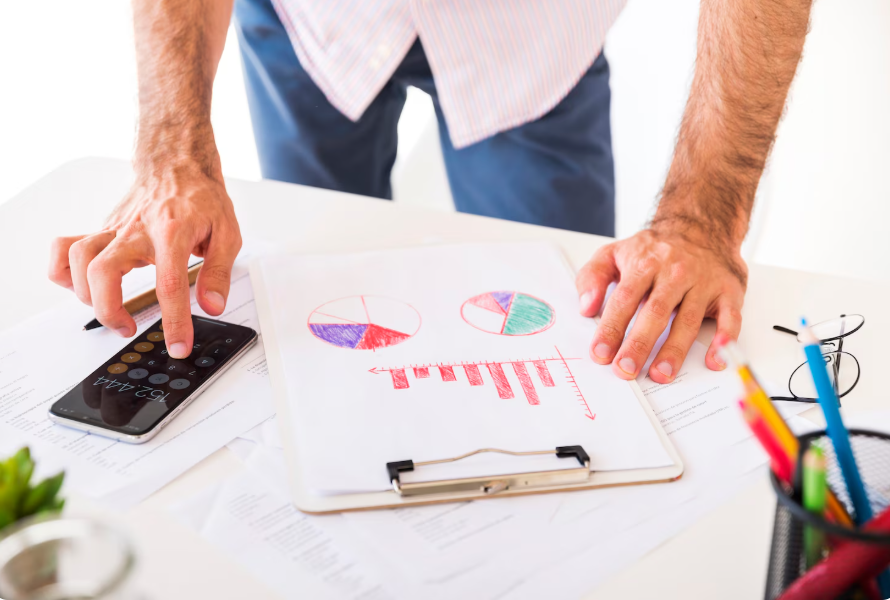
Understanding how percentages work is an essential skill that can simplify many aspects of daily life, from managing finances to evaluating discounts and tracking progress. In a world driven by numbers, having the ability to quickly interpret and apply percentage calculations can help you make more informed decisions. Many individuals rely on tools like a percentage online calculator to handle these calculations efficiently, especially when dealing with complex figures or time sensitive tasks. These tools eliminate the need for manual computation and reduce the chances of errors, making them highly valuable for both personal and professional use.
Percentages are everywhere, even if we do not always notice them. They are used in shopping to show discounts, in banking to represent interest rates, and in education to evaluate performance. A percentage simply represents a portion of a whole, expressed as a value out of one hundred. This makes it easier to compare different quantities and understand their relative significance. For example, scoring 75 out of 100 on a test immediately tells you that you achieved 75 percent, which is easier to interpret than the raw score alone.
One of the most practical uses of percentages is in shopping and budgeting. Retailers often advertise discounts in percentage form, which helps customers quickly understand how much they can save. For instance, a 30 percent discount on a product priced at 200 means a savings of 60. Without a clear understanding of percentages, it becomes difficult to evaluate whether a deal is truly beneficial. This is where digital tools and basic knowledge of percentage formulas can make a significant difference.
In the financial world, percentages play a critical role in helping individuals manage their money. Interest rates on loans, savings accounts, and investments are all expressed as percentages. Understanding how these rates work can help you plan for the future and avoid unnecessary expenses. For example, a higher interest rate on a loan means higher repayment costs, while a higher rate on savings leads to better returns. Being comfortable with percentage calculations allows you to compare financial options and choose the most suitable one.
Businesses also rely heavily on percentages to measure performance and growth. Metrics such as profit margins, revenue growth, and customer conversion rates are all calculated using percentages. These figures provide valuable insights into how a business is performing and where improvements can be made. Accurate percentage calculations are essential for making strategic decisions and achieving long term success in any industry.
Another important application of percentages is in data analysis and reporting. Whether it is survey results, exam scores, or market research, percentages provide a clear and concise way to present information. They make it easier to compare different data sets and draw meaningful conclusions. This is why percentages are widely used in presentations, reports, and research studies across various fields.
Learning how to calculate percentages manually is a useful skill that enhances your understanding of numbers. The basic formula involves dividing the part by the whole and multiplying the result by one hundred. While this method is straightforward, it can become time consuming when dealing with large or complex data. This is why many people prefer using online tools that provide instant and accurate results.
Tracking changes over time is another area where percentages are extremely helpful. Whether you are monitoring business growth, salary increments, or price changes, understanding how values increase or decrease is essential. To calculate percentage increase, you subtract the original value from the new value, divide the result by the original value, and then multiply by one hundred. This simple formula helps you measure growth in a clear and effective way, making it easier to evaluate progress and set future goals.
Technology has made percentage calculations more accessible than ever before. With a wide range of online tools and mobile applications available, anyone can perform calculations within seconds. These tools are designed to be user friendly and efficient, allowing even those with limited mathematical knowledge to use them confidently. This convenience has made percentage calculations an integral part of modern life.
In conclusion, mastering percentages is a valuable skill that can improve your ability to make decisions in everyday situations. From shopping and finance to business and data analysis, percentages provide a simple yet powerful way to understand and compare information. By combining basic knowledge with the use of digital tools, you can handle calculations with ease and accuracy, ultimately gaining better control over your personal and professional activities.